
Abaya Design Trends 2026: What Wholesale Buyers & Boutique Owners Should Know
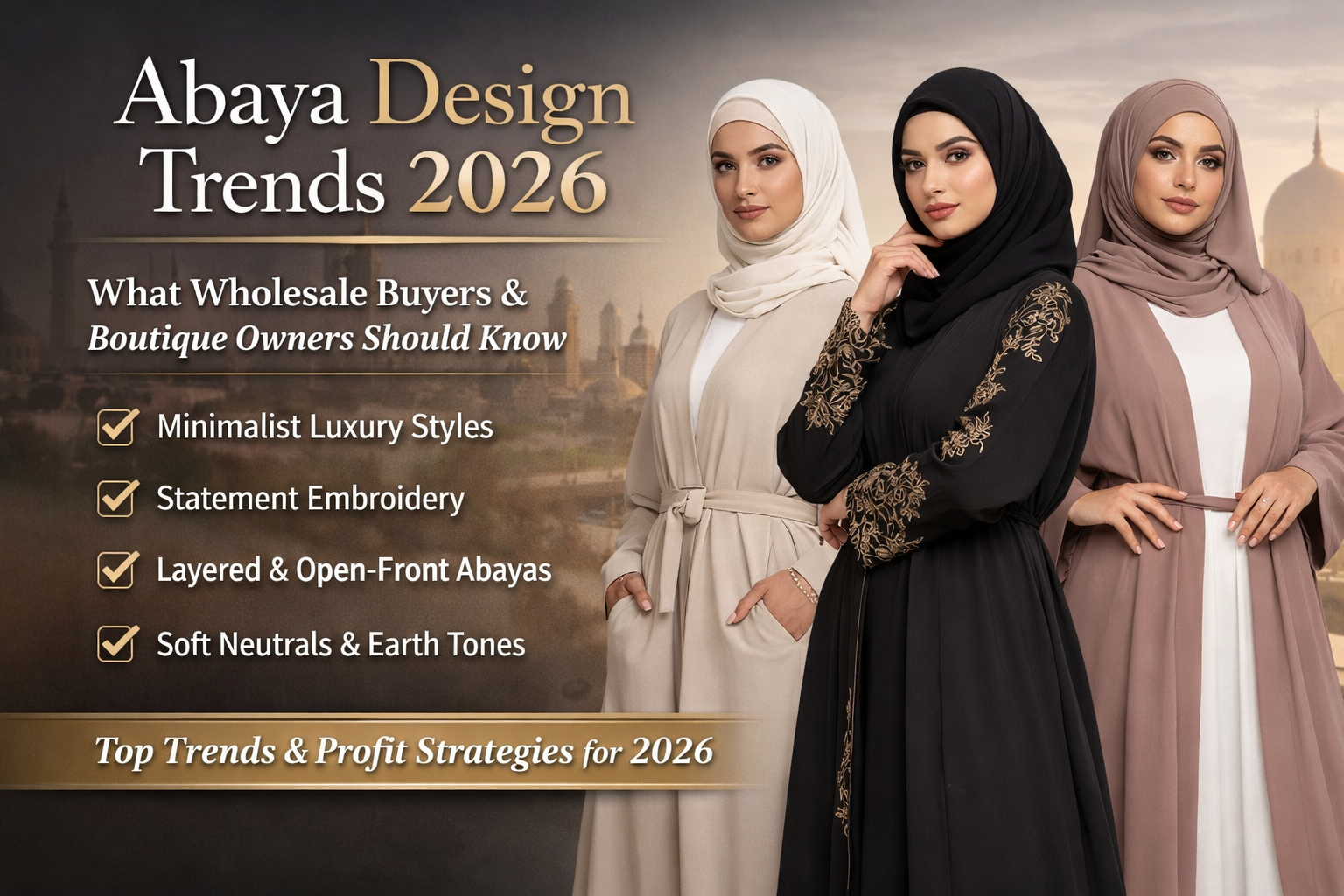
The global modest fashion market is evolving faster than ever, and abaya designs are no longer driven by tradition alone. In 2026, abaya design trends are being shaped by changing customer lifestyles, social media influence, fabric innovation, and rising competition among boutique brands.
For wholesale buyers and boutique owners, keeping up with abaya design trends 2026 is no longer optional—it directly affects sell-through rates, inventory turnover, and brand positioning. Stocking outdated designs can lead to slow-moving inventory, while choosing the right trending abaya styles can significantly boost sales and customer loyalty.
Many buyers make the mistake of following trends blindly. What works on the runway or social media doesn’t always work in retail or wholesale markets. That’s why understanding which abaya fashion trends are commercially viable is critical before placing bulk orders.
In this guide, we’ll break down the most important abaya design trends for 2026, explain how they impact wholesale buying decisions, and help boutique owners choose styles that are not only fashionable—but profitable.
Why Abaya Design Trends Matter for Wholesale Buyers
For wholesale buyers and boutique owners, abaya design trends are more than a style update—they are a business signal. The designs you choose to stock directly influence how quickly products sell, how customers perceive your brand, and how much profit you generate from each collection.
Faster Sell-Through & Reduced Dead Stock
Trending abaya designs attract immediate customer attention. When buyers recognize modern cuts, colors, or detailing that align with current fashion trends, they are more likely to purchase without hesitation. This leads to faster inventory movement and reduces the risk of unsold or outdated stock.
Wholesale buyers who ignore design trends often face slow-moving inventory, forcing them to discount products later—reducing profit margins.
Stronger Brand Positioning for Boutiques
Boutique owners rely heavily on brand image. Stocking up-to-date abaya styles positions a boutique as modern, relevant, and fashion-aware. Customers are more likely to trust boutiques that consistently offer fresh and contemporary designs.
In competitive markets, following the right abaya design trends helps boutiques stand out and build long-term customer loyalty.
Better Demand Forecasting
Understanding design trends helps wholesale buyers predict customer demand more accurately. When buyers know which styles are gaining popularity, they can plan bulk orders with confidence—choosing designs that are likely to sell across different seasons.
This also helps buyers balance “safe” classic designs with trend-forward pieces that generate excitement.
Higher Perceived Value & Pricing Flexibility
Trend-aligned abayas often carry a higher perceived value. Customers are generally willing to pay more for designs that feel current, stylish, and unique. For wholesale buyers, this means better pricing flexibility and healthier profit margins.
Well-chosen trends allow boutiques to justify premium pricing without compromising sales volume.
Competitive Advantage in Wholesale Markets
The wholesale abaya market is becoming increasingly competitive, with more suppliers and brands entering the space each year. Buyers who stay informed about upcoming abaya design trends can secure competitive advantage by offering styles that competitors have not yet adopted.
This early-mover advantage often leads to higher visibility and stronger market presence.
Top Abaya Design Trends 2026 (Wholesale-Friendly Styles)
In 2026, abaya design trends are moving toward a balance between modern aesthetics and commercial practicality. Wholesale buyers are focusing less on extreme fashion experiments and more on styles that combine elegance, comfort, and repeat-purchase potential.
Below are the most commercially viable abaya design trends for 2026, carefully selected with wholesale and boutique sales performance in mind.
Minimalist Luxury Abayas
Minimalist luxury continues to dominate abaya fashion trends in 2026. Clean silhouettes, subtle detailing, and refined cuts are becoming more popular than heavy embellishment.
These designs appeal strongly to:
- Boutique customers
- Professional women
- International buyers
From a wholesale perspective, minimalist abayas are easier to produce in bulk, suit multiple markets, and remain relevant longer—making them a safer investment.
Embroidery-Focused Statement Abayas
Rather than full heavy embroidery, 2026 trends show a shift toward focused statement embroidery. Designs now highlight embroidery on sleeves, cuffs, neckline, or front panels while keeping the rest of the abaya clean.
This trend allows wholesale buyers to:
- Offer premium-looking designs
- Control production costs
- Target higher price points without over-complication
Statement embroidery also works well across Middle Eastern, European, and South Asian markets.
Open-Front & Kimono-Style Abayas
Open-front abayas and kimono-inspired designs continue to gain popularity, especially among younger customers and boutique brands. These styles allow layering with inner dresses and offer styling flexibility.
Wholesale buyers favor this trend because:
- One design can be styled multiple ways
- It attracts fashion-forward customers
- It works well for international modest fashion markets
This trend is especially strong in urban and Western markets.
Layered & Structured Abaya Designs
Layered abayas with inner panels, attached capes, or contrast textures are becoming more visible in 2026 collections. These designs add visual depth while keeping the abaya modest and wearable.
For wholesale buyers, layered designs:
- Increase perceived value
- Justify higher retail pricing
- Create differentiation without drastic pattern changes
Soft Neutrals, Pastels & Earth Tones
Color trends in 2026 are shifting away from only black toward soft neutrals, pastel shades, and earth tones. Colors like beige, taupe, olive, dusty pink, and muted grey are gaining strong demand.
Wholesale buyers are increasingly adding:
- Limited color variations per design
- Neutral-first collections with accent colors
This approach reduces risk while still offering variety.
Modern Everyday Abayas
Comfort-focused abayas designed for daily wear remain one of the strongest wholesale trends. Relaxed fits, lightweight fabrics, and functional designs are in high demand.
These styles sell well because they:
- Target repeat buyers
- Suit everyday use
- Perform well across different regions and climates
For wholesale buyers, everyday abayas often generate consistent sales volume.
Fabric Trends Influencing Abaya Design in 2026
In 2026, abaya design trends are being heavily influenced by fabric innovation and customer comfort expectations. Wholesale buyers are no longer selecting designs alone—they are evaluating how fabric choice supports wearability, durability, and long-term market demand.
Understanding fabric trends helps buyers select designs that not only look fashionable but also perform well in real-world use.
Lightweight & Breathable Fabrics Take Priority
As customer lifestyles become more active, lightweight and breathable fabrics are gaining increased demand. Buyers are prioritizing materials that offer airflow, softness, and ease of movement while maintaining modest coverage.
These fabric trends align strongly with everyday abaya collections and warm-climate markets.
Premium Nida Variations for Modern Designs
Nida fabric continues to dominate premium abaya collections, but in 2026, buyers are seeing increased interest in enhanced nida variations. These updated versions offer improved softness, smoother drape, and better wrinkle resistance.
Wholesale buyers prefer premium nida fabrics because they support modern silhouettes, embroidery detailing, and long-term wearability—making them ideal for trend-driven collections.
Matte Finishes Over High Gloss
Fabric finishes are shifting away from heavy shine toward matte or soft-sheen surfaces. Matte textures create a more refined and modern appearance, aligning well with minimalist luxury abaya designs.
This trend helps boutiques attract customers who prefer understated elegance rather than overly flashy garments.
Fabric Texture & Subtle Contrast
Textured fabrics and subtle contrast layering are becoming popular in 2026 designs. Instead of bold color contrast, designers are using fabric texture differences to add visual depth—such as pairing smooth inner layers with lightly textured outer fabrics.
Wholesale buyers value this trend because it increases perceived value without drastically increasing production cost.
Sustainability & Fabric Longevity Awareness
There is growing awareness among buyers and customers about fabric longevity and sustainability. Materials that maintain shape, color, and quality after repeated use are increasingly preferred.
Wholesale buyers are choosing fabrics that reduce return rates and improve customer satisfaction—making durability an essential trend factor.
To understand fabric selection in detail, buyers can explore our complete guide on choosing the best fabric for abaya, which explains material types, quality evaluation, and pricing impact.
How Boutique Owners Can Choose Abaya Trends That Actually Sell
Not every trending abaya design guarantees strong sales. Successful boutique owners understand that the key is selecting trends that align with customer behavior, pricing expectations, and local demand—not just what looks fashionable online.
Here’s how boutique owners can choose abaya design trends that convert into consistent sales.
Understand Your Core Customer First
Before following any trend, boutique owners should clearly understand who their customers are. Customer age, lifestyle, location, and purchasing habits all influence which abaya styles perform best.
For example, minimalist designs often appeal to professional women, while embellished or layered styles may attract occasion-focused buyers. Matching trends to customer profiles reduces sales risk.
Balance Trendy Pieces With Safe Designs
Successful collections usually combine:
- Classic, fast-moving designs
- A limited number of trend-forward styles
This balance allows boutiques to test new abaya design trends without overcommitting inventory. Trendy pieces attract attention, while classic designs ensure stable sales volume.
Match Trends With the Right Price Range
Trendy abaya designs should align with your boutique’s pricing strategy. High-detail designs require higher price points, while minimalist or everyday styles perform better at mid-range pricing.
Boutique owners who align trends with realistic pricing expectations achieve better profit margins and faster sell-through.
Consider Fabric & Comfort Alongside Design
Customers rarely compromise comfort for style, especially for everyday wear. Boutique owners should ensure that trendy designs are supported by comfortable, breathable fabrics.
Abaya styles that look good but feel uncomfortable often fail in repeat sales, regardless of trend popularity.
Observe Market Feedback & Reorder Patterns
Pay attention to customer feedback and reorder trends. Designs that sell out quickly or receive positive customer responses are strong indicators of successful trends.
Using real sales data helps boutique owners refine future wholesale orders and reduce guesswork.
Avoid Over-Stocking Trend-Heavy Designs
Trends change quickly. Boutique owners should avoid over-ordering highly trend-specific designs unless demand is proven. Smaller test orders help reduce risk while still allowing boutiques to stay current.
How Manufacturers Help Turn Abaya Trends Into Profitable Collections
Following abaya design trends is only one part of the equation. Turning those trends into profitable, sellable collections requires reliable manufacturing support. For wholesale buyers and boutique owners, the right manufacturer plays a critical role in transforming design ideas into consistent, market-ready products.
Translating Trends Into Production-Ready Designs
Manufacturers help buyers adapt trending abaya styles into designs that are suitable for bulk production. Not every trend is manufacturing-friendly, and experienced manufacturers know how to adjust patterns, cuts, and detailing while preserving the overall design concept.
This ensures that trendy designs remain scalable, cost-effective, and durable in wholesale quantities.
Fabric Selection & Quality Consistency
Manufacturers guide buyers in selecting fabrics that support both the design trend and the intended market. Choosing the right material ensures comfort, durability, and consistent quality across production batches.
Consistency is especially important for boutique owners who plan to reorder successful designs without variations in fabric feel or appearance.
Cost Control Without Compromising Design
Experienced manufacturers understand how to balance design details with production cost. By optimizing embroidery placement, fabric usage, and finishing techniques, manufacturers help buyers maintain attractive price points while preserving design appeal.
This cost control directly affects wholesale profitability and retail pricing flexibility.
Customization & Private Label Support
Manufacturers often provide customization options such as:
- Custom sizing
- Color variations
- Branding and labeling
- Packaging support
These services allow boutique owners to offer unique collections that align with current abaya design trends while maintaining brand identity.
Reliable Production Timelines
Trend-driven collections are time-sensitive. Manufacturers help ensure timely production and delivery so buyers can launch collections when market demand is highest.
Reliable timelines reduce missed opportunities and help boutiques stay ahead of competitors.
Common Mistakes Wholesale Buyers Make When Following Abaya Trends
While following abaya design trends can drive sales, many wholesale buyers make avoidable mistakes that reduce profitability and increase inventory risk. Understanding these common errors helps boutique owners make smarter buying decisions and protect long-term business growth.
Chasing Every Trend Without a Clear Strategy
One of the most common mistakes is trying to stock every trending design at once. Not all trends suit every market, customer base, or price range.
Wholesale buyers who chase trends blindly often end up with inconsistent collections and unsold stock. A focused strategy—selecting only trends that align with your brand and customers—leads to better results.
Ignoring Customer Comfort & Practicality
Some abaya designs look attractive online but fail in real-world use. Buyers sometimes prioritize visual trends without considering comfort, fabric performance, or wearability.
Abayas that are uncomfortable, heavy, or impractical often see poor repeat sales, even if they initially attract attention.
Over-Ordering Trend-Heavy Designs
Highly trend-specific designs usually have a shorter lifecycle. Ordering large quantities without testing demand can increase financial risk.
Smart wholesale buyers test trend-driven designs in smaller quantities first, then scale up based on actual sales performance.
Choosing Design Trends Without Fabric Compatibility
Not all fabrics support every design trend. Heavy embellishments, layered styles, or structured cuts require specific materials to maintain quality.
Ignoring fabric compatibility can lead to poor finishing, durability issues, or customer complaints—damaging brand reputation.
Delaying Production Too Long
Trends are time-sensitive. Buyers who delay decision-making or production may miss peak demand windows. Late market entry often results in reduced interest and lower sales potential.
Working with manufacturers who understand trend timelines helps buyers stay competitive.
Relying Only on Social Media Trends
While social media is a valuable trend indicator, not all viral designs translate into strong retail sales. Wholesale buyers should combine online trend observation with real customer feedback and sales data.
Balanced decision-making reduces risk and improves collection performance.
Frequently Asked Questions About Abaya Design Trends 20
Q1: What are the most popular abaya design trends in 2026?
In 2026, the most popular abaya design trends include minimalist luxury styles, statement embroidery, open-front and kimono-style abayas, layered designs, and modern everyday abayas. These styles balance fashion appeal with comfort and commercial viability.
Q2: Which abaya design trends are best for wholesale buyers?
Wholesale buyers benefit most from trends that offer long-term demand, such as minimalist designs, everyday wearable abayas, and subtle embroidery styles. These trends are easier to produce in bulk and perform consistently across different markets.
Q3: How can boutique owners choose abaya trends that will sell well?
Boutique owners should choose abaya design trends based on their target customers, price range, and local demand. Combining classic designs with a limited number of trend-forward pieces helps reduce risk while keeping collections fresh.
Q4: Do abaya design trends differ by region?
Yes, abaya design trends vary by region. Middle Eastern markets often prefer elegant and structured designs, while European and Western markets favor open-front, layered, and minimalist styles. Understanding regional preferences helps wholesale buyers stock more effectively.
Q5: How do manufacturers help wholesale buyers follow abaya design trends?
Manufacturers help wholesale buyers adapt trends into production-ready designs by advising on fabric selection, cost control, customization, and scalable production. This ensures trend-based designs remain profitable and consistent in bulk orders.
Q6: Should wholesale buyers follow social media trends when choosing abaya designs?
Social media trends can provide inspiration, but wholesale buyers should not rely on them alone. Combining trend insights with customer feedback, sales data, and fabric suitability leads to better purchasing decisions.
Q7: How often should boutique owners update abaya collections based on trends?
Most boutique owners update trend-focused abaya collections seasonally or twice a year. This approach allows them to stay relevant without over-investing in short-lived fashion trends.
Conclusion: Turning Abaya Trends Into Profitable Wholesale Collections
Abaya design trends in 2026 reflect a clear shift toward modern elegance, comfort-focused styling, and commercially viable designs. For wholesale buyers and boutique owners, success lies not in chasing every new trend—but in selecting styles that align with customer demand, fabric performance, and long-term brand positioning.
From minimalist luxury silhouettes and statement embroidery to open-front designs and modern everyday abayas, the most successful trends are those that balance fashion appeal with practicality. Buyers who understand how design trends interact with fabric choice, pricing strategy, and manufacturing capability are better positioned to build collections that sell consistently.
Equally important is working with manufacturers who can translate trends into scalable, high-quality production. Reliable manufacturing allows buyers to maintain design integrity, control costs, and meet market timelines—turning trend awareness into real business growth.
At Aladdin Clothing, trend analysis, fabric expertise, and manufacturing planning are aligned to support wholesale buyers, boutique brands, and international partners. By combining market insight with production experience, collections can be developed that reflect current abaya design trends while remaining profitable and market-ready.
Staying informed, planning strategically, and choosing the right manufacturing partners helps wholesale buyers move confidently in a competitive modest fashion market.
Looking to develop a trend-focused abaya collection for your boutique or wholesale business?
Explore how professional manufacturing support can help turn design ideas into consistent, scalable products.

Afreen Hafsa is a fashion designer specializing in modest wear and abaya design. With over a decade of hands-on experience in fashion design training, fabric selection, and production coordination, she works closely with manufacturing teams to ensure quality, fit, and practicality for wholesale and bulk orders.
The insight about distinguishing between runway trends and commercially viable wholesale choices is exactly what many boutique owners struggle with this season. Focusing on fabric innovation and lifestyle shifts rather than just aesthetics is a smart strategy to ensure better inventory turnover in the coming year. It’s clear that understanding the ‘why’ behind a trend is just as critical as spotting the trend itself.
The point about how runway trends don’t always translate well to the wholesale market is a crucial insight that many buyers overlook. Focusing on commercially viable styles rather than just social media hype is definitely the key to preventing slow inventory turnover this year.
You make a crucial point about the danger of following runway trends blindly, and I completely agree that understanding commercial viability is key to moving inventory for wholesale buyers. It’s great to see an emphasis on how fabric innovation and lifestyle changes are reshaping the market, as these are often the real drivers behind long-term customer loyalty. Thanks for breaking down what truly matters for boutique success in 2026.
“The drape and flow are really what sell an abaya online, and flat images rarely capture how Nida fabric moves with the body. For boutique owners testing new silhouettes or layered looks, a tool like motion control ai could be handy for producing short product clips that show the garment in motion without booking a full shoot. Pairing trend-led design with quick video turnarounds feels like a practical way to keep wholesale catalogs feeling current through 2026.”
The article’s breakdown of minimalist luxury and embroidery-focused statement abayas as commercially viable trends for 2026 is highly practical for wholesale buyers looking to balance fashion appeal with inventory safety.