
Abaya Size Chart & Measurements Guide (Inches): How Wholesale Buyers Avoid Fit Issues & Returns
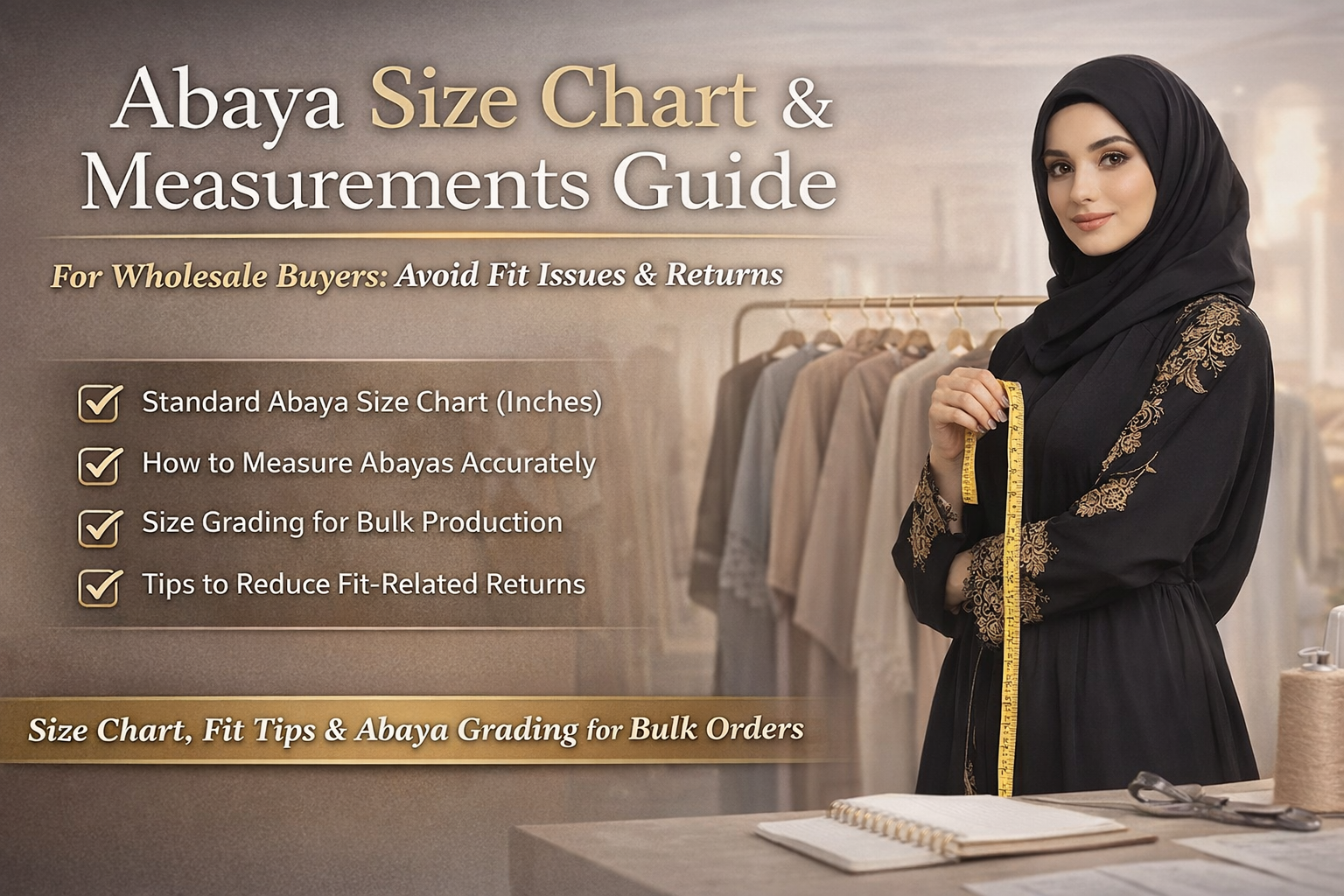
When sourcing abayas in bulk, size issues are one of the biggest causes of returns, losses, and customer complaints. Many wholesale buyers focus on fabric, design, and price—but overlook the importance of a clear abaya size chart.
An accurate abaya size chart in inches helps boutique owners, resellers, and fashion brands ensure consistent fit across different body types, regions, and markets. In this guide, we’ll break down abaya measurements, sizing logic, and wholesale sizing best practices so you can place confident bulk orders without costly mistakes.
Why Abaya Sizing Matters for Wholesale Orders
For retail buyers, one size mismatch affects one customer.
For wholesale buyers, one size mistake affects dozens or hundreds of pieces.
Using a standardized abaya size chart helps you:
- Reduce return rates
- Improve customer satisfaction
- Maintain brand consistency
- Avoid size disputes with manufacturers
- Scale confidently in international markets
Wholesale abaya sizing is not just about “S, M, L”—it’s about length, chest, sleeve, and overall fit proportions.
Standard Abaya Size Chart (INCHES)
Below is a commonly used abaya size chart in inches for wholesale production.
(This works well for Middle East, UK, USA & EU markets.)
Abaya Size Chart (Inches)
| Size | Chest (in) | Length (in) | Sleeve Length (in) |
|---|---|---|---|
| S | 38–40 | 52–54 | 22–23 |
| M | 42–44 | 54–56 | 23–24 |
| L | 46–48 | 56–58 | 24–25 |
| XL | 50–52 | 58–60 | 25–26 |
| XXL | 54–56 | 60–62 | 26–27 |
Note: Measurements may vary slightly depending on fabric type and design (A-line, butterfly, umbrella cut, etc.).
How to Measure an Abaya Correctly (Wholesale Standard)
Accurate measurements are critical in wholesale abaya production. Even small inconsistencies can lead to sizing disputes, customer dissatisfaction, and costly returns—especially when producing in bulk. That’s why professional abaya manufacturers and wholesale buyers follow a standardized measurement process to ensure consistency across all sizes and styles.
Below is the industry-accepted wholesale method for measuring an abaya correctly.
Abaya Length (Shoulder to Hem)
Abaya length is measured from the highest point of the shoulder straight down to the desired hemline.
- Always measure on a flat surface
- The abaya should be fully extended, not folded
- Length is usually specified in inches for international wholesale orders
- Common wholesale lengths range from 50” to 62”, depending on target markets
Tip: For bulk orders, always confirm whether length is measured with or without shoes to avoid confusion.
Chest / Bust Width
Chest width is measured across the front, from one underarm seam to the other.
- Lay the abaya flat
- Measure straight across at the widest chest point
- Double the measurement to get the full circumference (if required)
This measurement is crucial for comfort, especially for everyday wear and plus-size collections.
Sleeve Length
Sleeve length is measured from the shoulder seam to the end of the sleeve cuff.
- For batwing or kimono styles, measure from the neck seam to cuff
- Confirm whether sleeves are straight, flared, or elastic-finished
- Keep sleeve measurements consistent across all sizes in bulk runs
Armhole / Upper Arm Width
Armhole width affects mobility and comfort.
- Measure around the upper arm area
- Important for customers who prefer relaxed or modest fits
- This measurement is often overlooked but critical for wholesale quality control
Bottom Width / Hem Width
Hem width is measured across the bottom edge of the abaya.
- Indicates how flowy or fitted the design will be
- Wider hems are common in luxury and formal abayas
- Narrower hems are preferred for everyday and travel-friendly styles
Fabric Behavior Consideration
Always account for how the fabric behaves:
- Crepe & nida: Minimal stretch, stable sizing
- Chiffon & satin: Drapes more, may appear longer when worn
- Cotton blends: May shrink slightly if not pre-washed
Wholesale best practice: Measure after fabric finishing and pre-treatment.
Size Grading for Bulk Production
Once a base size is finalized:
- Increase or decrease measurements proportionally
- Maintain the same design balance across all sizes
- Document measurements clearly in a size specification sheet
This ensures consistent sizing across hundreds or thousands of pieces.
Final Wholesale Tip
Always request or provide:
- A measurement chart in inches
- A physical or approved sample
- Written confirmation of measurement standards before bulk production
This single step prevents most wholesale sizing issues.
Common Abaya Fit Types & How They Affect Size
Different designs change how sizing behaves—even with the same measurements.
- Straight Cut Abaya → True to size
- A-line Abaya → Slightly flexible fit
- Butterfly Abaya → Loose fit, fewer size complaints
- Umbrella Abaya → Length matters more than chest
This is why wholesale buyers should pair the abaya size chart with design type.
Size Grading for Wholesale Production
When placing bulk orders, manufacturers use size grading.
Example:
- Base size: M
- Grading difference: +2 inches per size
A proper grading system ensures:
- Proportional sizing
- Consistent fit across all sizes
- Professional brand presentation
Always ask your supplier:
“Do you follow standardized grading for abaya size charts?”
Wholesale Tips to Avoid Size-Related Returns
✔ Request sample approval before bulk production
✔ Share your abaya size chart in inches clearly
✔ Confirm length preference by market (Gulf vs Europe)
✔ Use size labels consistently (S–XXL)
✔ Mention fabric stretch behavior in product descriptions
These steps alone can reduce size-related issues by 30–40%.
Frequently Asked Questions About Abaya Size Chart & Measurements
Q1: What is the best abaya size chart for wholesale buyers?
The best abaya size chart uses inches, includes chest, length, and sleeve measurements, and matches the target market’s height preferences.
Q2: Should abaya sizing be based on body or garment measurements?
Wholesale abaya sizing should always be based on flat garment measurements, not body size.
Q3: Does fabric affect abaya sizing?
Yes. Stretch fabrics like nida allow flexibility, while satin and crepe require more precise sizing.
Q4: What abaya length is most popular internationally?
Most international wholesale buyers prefer 54–58 inches, depending on market and average height.
Want to learn more –
Abaya Wholesale Price Explained

Afreen Hafsa is a fashion designer specializing in modest wear and abaya design. With over a decade of hands-on experience in fashion design training, fabric selection, and production coordination, she works closely with manufacturing teams to ensure quality, fit, and practicality for wholesale and bulk orders.
As a wholesale buyer, I’ve experienced firsthand how critical it is to have a clear size chart when ordering abayas in bulk. This guide really highlights the importance of standardizing measurements to avoid returns and ensure customer satisfaction across different markets. It’s a practical reminder that good sizing practices can make or break a wholesale partnership.