
Abaya Wholesale Buying Guide: MOQ, Pricing & Quality Checklist
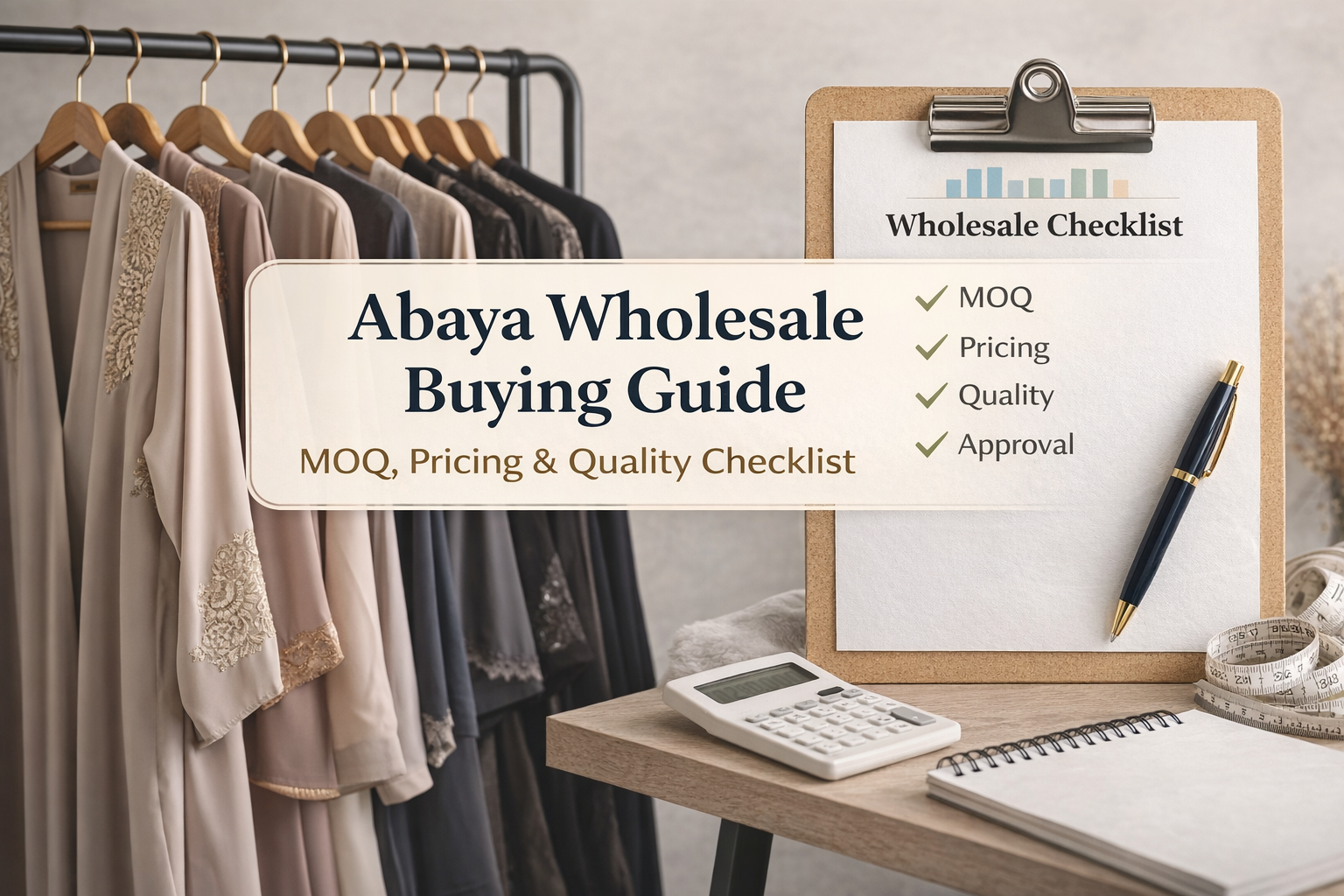
Buying abayas in bulk can be a smart growth move for boutique owners, resellers, and modest fashion brands—but only when it’s done with the right understanding. Many wholesale buyers face issues like inconsistent quality, unclear pricing, or products that don’t match approved samples. These problems usually come from gaps in knowledge, not bad intentions.
This guide breaks down how abaya wholesale buying actually works, focusing on the three pillars that matter most: MOQ, pricing, and quality checks. If you’re planning a bulk order, this checklist will help you make confident decisions and avoid costly mistakes.
What Does “Wholesale” Mean in Abaya Sourcing?
Wholesale abaya buying means purchasing garments in bulk quantities directly from manufacturers or wholesale suppliers at a lower per-unit cost than retail. Wholesale sourcing is typically used by:
- Boutique retail stores
- Online modest fashion brands
- Resellers and distributors
- Private-label businesses
Unlike retail buying, wholesale requires planning before production—clear communication, realistic timelines, and defined quality standards. Understanding these basics sets the foundation for a smooth bulk order.
Understanding MOQ in Abaya Wholesale
What Is MOQ?
MOQ stands for Minimum Order Quantity. It’s the smallest number of pieces a manufacturer requires per design, color, or order. MOQs exist because bulk production involves fabric sourcing, pattern making, size grading, and production line setup—processes that aren’t cost-effective at very small quantities.
Typical MOQ Ranges
While MOQs vary by supplier and design, common ranges include:
- Low MOQ: 30–50 pieces
Limited customization, higher per-unit price - Medium MOQ: 100–200 pieces
Balanced pricing and flexibility - High MOQ: 300+ pieces
Best pricing, strong customization options
Lower MOQs may be possible, but buyers should expect trade-offs in pricing or design flexibility.
MOQ vs Customization
Customization—such as fabric selection, embroidery, size variation, or private labeling—often affects MOQ. In general:
- More customization → higher MOQ
- Standard designs → lower MOQ
Understanding this balance helps buyers align their brand goals with budget and order size.
How Abaya Wholesale Pricing Works
Wholesale pricing isn’t fixed. It’s calculated based on multiple production factors.
Fabric Selection
Fabric is one of the biggest cost drivers. Pricing changes depending on:
- Fabric type (nida, crepe, chiffon, etc.)
- Fabric weight and durability
- Locally sourced vs imported materials
Higher-quality fabrics improve comfort and longevity but increase unit cost.
Design Complexity
Design details directly impact labor cost, including:
- Embroidery or handwork
- Pleating and layered construction
- Decorative trims and finishes
Simpler designs are more cost-efficient for large orders, while detailed designs suit premium collections.
Order Quantity
Higher quantities reduce per-unit cost because production overhead is spread across more pieces. This is why bulk buyers usually receive better pricing than small-batch buyers.
Hidden Costs Buyers Should Ask About
Before confirming an order, clarify these potential extras:
- Sampling or prototyping fees
- Packaging options
- Labeling or tagging charges
- Export packing requirements
Clear discussions upfront prevent misunderstandings later.
Quality Checklist Before Placing a Bulk Abaya Order
Quality issues are the most expensive wholesale mistakes. Use this checklist before approving bulk production.
Stitching & Finishing
- Even stitching lines
- Secure seams
- No loose threads
Fabric Consistency
- Uniform fabric weight
- Consistent color across all pieces
- Comfortable drape and feel
Size Grading & Measurements
- Accurate size charts
- Consistent measurements across units
- Proper grading between sizes
Color Fastness
- Fabric should not bleed or fade easily
- Especially important for darker colors
Sample Approval (Critical Step)
Always request and approve a pre-production sample before bulk manufacturing. This ensures design accuracy, confirms quality expectations, and aligns both parties before full production begins. Skipping this step often leads to disputes.
Common Wholesale Buying Mistakes to Avoid
Even experienced buyers repeat the same mistakes:
- Choosing the lowest price without checking quality
- Placing bulk orders without sample approval
- Assuming customization is included by default
- Poor communication about timelines and expectations
Avoiding these mistakes protects both your investment and your brand reputation.
Choosing the Right Wholesale Partner
A successful wholesale experience depends not only on price but also on communication, transparency, and production reliability. Buyers who work with experienced manufacturers benefit from clear MOQs, consistent quality control, and better support for repeat orders.
If you’re still evaluating suppliers, this guide can help:
👉 Abaya Manufacturers: How to Choose the Right Supplier for Your Brand
Final Thoughts
Abaya wholesale buying doesn’t have to be complicated. Understanding MOQ, pricing factors, and quality checkpoints gives you control over the process and helps you build a sustainable business.
Wholesale success comes from preparation—not rushed decisions. When buyers approach sourcing with the right knowledge, bulk ordering becomes a growth opportunity rather than a risk.
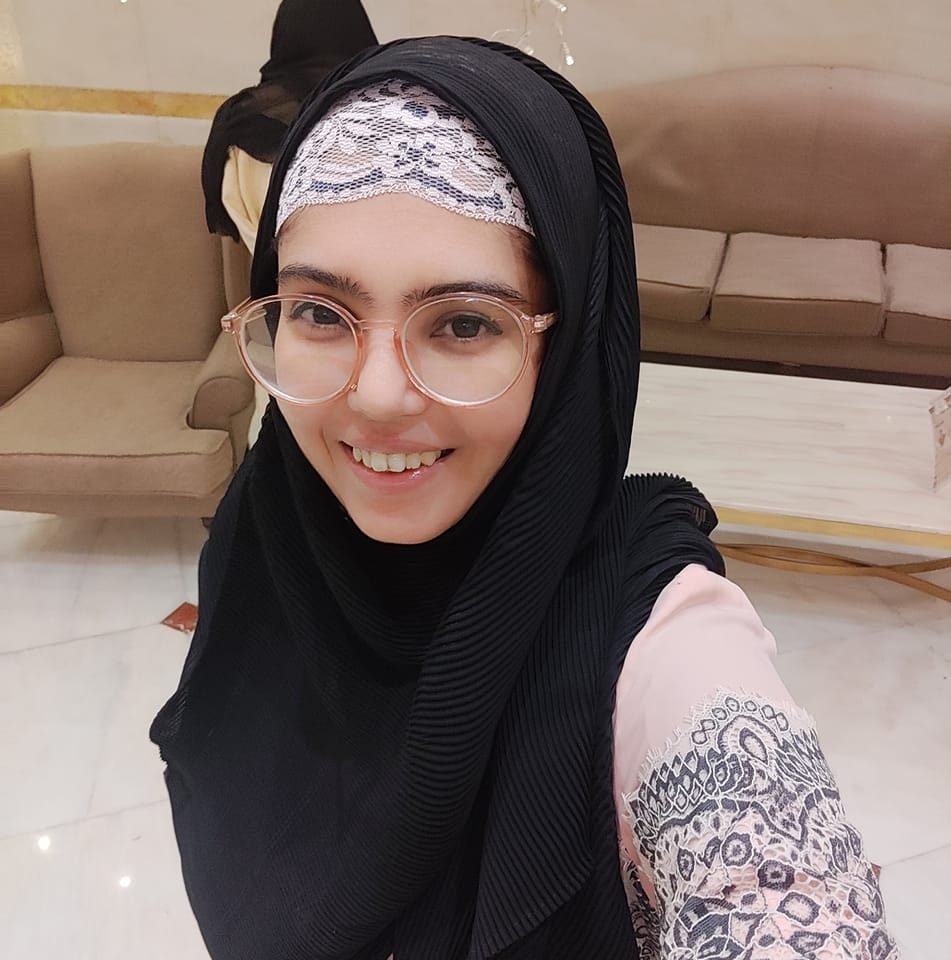
Afreen Hafsa is a fashion designer specializing in modest wear and abaya design. With over a decade of hands-on experience in fashion design training, fabric selection, and production coordination, she works closely with manufacturing teams to ensure quality, fit, and practicality for wholesale and bulk orders.
4 Replies to